
Akpabio-Akpoti and the Courts: Our Position

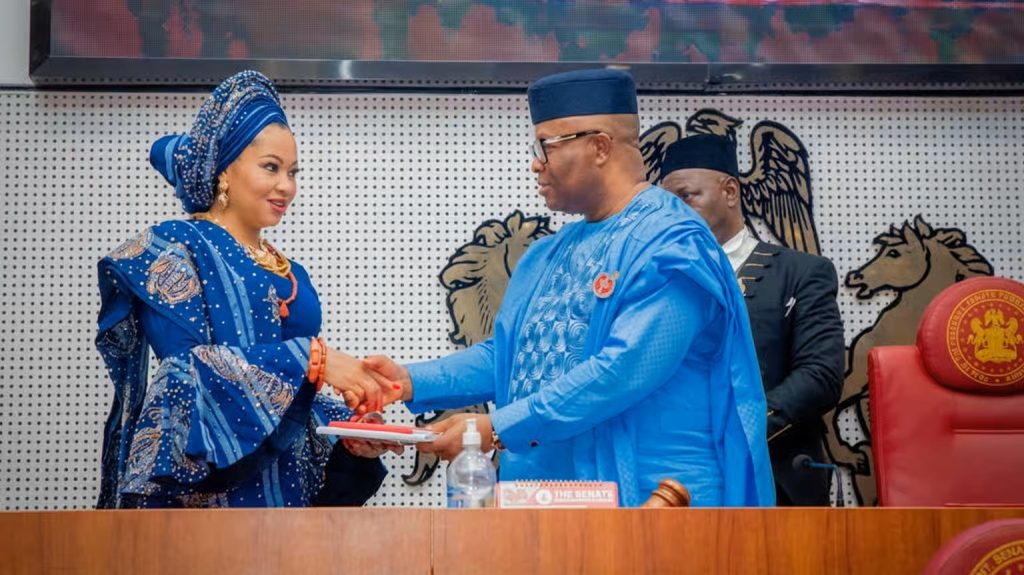
We recognize that the ongoing standoff involving Senator Natasha Akpoti-Uduaghan, Senate President Godswill Akpabio, and the judiciary presents a complex and sensitive challenge for Nigeria’s democracy—one that calls on us to seek a middle path grounded in respect, restraint, and unwavering commitment to constitutional principles.
On one hand, we acknowledge Senator Akpoti’s insistence on resuming her legislative duties following a Federal High Court judgment which declared her suspension by the Senate unconstitutional, interpreting that ruling as authorization for her reinstatement. On the other hand, Senate leadership maintains that the suspension remains valid, arguing that the court’s decision is advisory rather than mandatory, and emphasizing the importance of parliamentary autonomy and immunity from judicial interference. Meanwhile, the judiciary has offered nuanced findings—reaffirming legislative immunity while urging that suspensiosns be fair and proportionate—thereby creating a space for differing interpretations.
As a co-equal branch of government, we understand that the Senate must safeguard its internal processes and disciplinary mechanisms to protect institutional integrity. Yet, we also know that it cannot place itself above the Constitution or disregard judicial pronouncements without risking the erosion of public trust and democratic norms.
Similarly, we appreciate Senator Akpoti’s determined assertion of her mandate, which underscores the critical role of individual rights and representation in a democracy. Nevertheless, we recognize that persistence without dialogue or accommodation risks deepening institutional divides.
In this impasse, Akpabio must “draw back fire” by recalibrating his response. Furthermore, his leadership must address the underlying issues of decorum and mutual respect within the Senate chamber, promoting an environment where grievances—however politically sensitive—are resolved promptly and not allowed to linger.
For the good of Nigeria’s democracy, it is imperative that all parties sheath their swords and pursue a balanced, respectful resolution. We urge the Senate to promptly engage Senator Akpoti and her legal team to clarify the implications of the court rulings and explore a diplomatic pathway that both respects the sanctions imposed and protects her constitutional role.
Likewise, we call on Senate leadership to facilitate a transparent review of disciplinary measures in accordance with parliamentary rules, ensuring due process, fairness, and proportionality rather than prolonged exclusion. At the same time, we encourage Senator Akpoti to temper her plans for resumption with openness to institutional protocols and patience for ongoing legal appeals, thereby preventing confrontations that could disrupt legislative functions.
Through mutual accommodation, we can avoid unnecessary spectacles such as armed security confrontations at the National Assembly gates and refocus on urgent national priorities. This standoff represents a critical test of our collective commitment to separation of powers, the rule of law, and democratic maturity. Finding a middle ground—where judicial authority is respected, legislative autonomy preserved, and individual rights upheld—can serve as a valuable template for resolving future conflicts.
It calls on each of us to demonstrate leadership courage by prioritizing Nigeria’s fragile democracy above personal or partisan interests. Ultimately, we believe that both the Senate and Senator Akpoti share the responsibility to reconcile, uphold democratic principles through dialogue, respect court directives, and adhere to constitutional norms. Only by doing so can Nigeria’s legislature restore its dignity and move forward as a united institution dedicated to serving the people’s interests.
The ongoing stalemate erodes public confidence in democratic institutions and hampers Nigeria’s legislative effectiveness. In light of this, it is imperative for both sides to sheathe their swords. The Senate leadership and Senator Akpoti must prioritize national interest over personal and political acrimony by embracing dialogue and compromise fortified by mutual respect for the constitution and legislative rules. Strengthening mechanisms for intra-legislative dispute resolution and respecting judicial decisions where appropriate would serve as vital steps toward restoring harmony.
Above all, this crisis demands sober reflection from all stakeholders on the principles of democracy: the supremacy of the constitution, the rule of law, and the need for institutional respect and cooperation. Nigeria’s democracy can only thrive when its political actors act as custodians of these values rather than adversaries undermining them. The call for reconciliation is not merely political expediency; it is a constitutional imperative to protect and deepen Nigeria’s democratic project.
Independent journalism, sustained by readers like you.
The Parliament Diary is published by The Parliament Cable Network Service Limited. Your support helps us keep covering governance, parliamentary affairs and grassroots politics across Nigeria.