
Why We Disagree with Donald Trump’s Aggressive Pronouncement on Nigeria

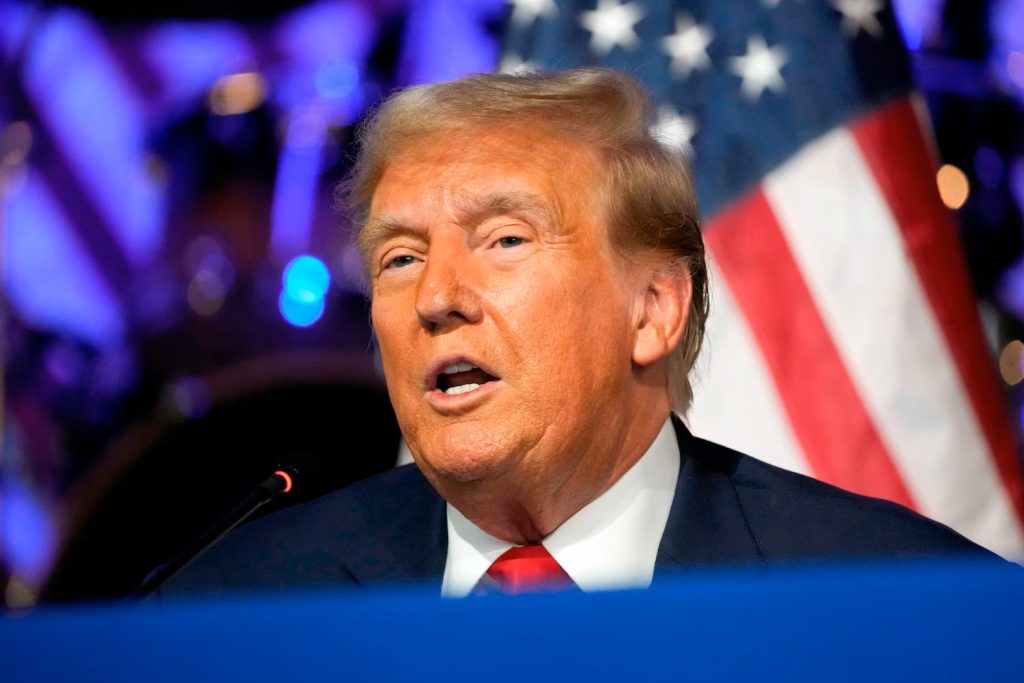
The world has witnessed a geopolitical jolt following the recent statements from former U.S. President Donald Trump, who has publicly declared Nigeria a “Country of Particular Concern” and suggested the possibility of military intervention involving “guns-a-blazing” action. While concerns for human rights and security are universal responsibilities, The Parliament Diary unequivocally disagrees with the tone, approach, and underlying assumptions of President Trump’s pronouncements on Nigeria. These aggressive remarks, steeped in misrepresentation and lacking diplomatic delicacy, pose serious risks to Nigeria’s sovereignty, regional stability, and the global fight against terrorism.
This editorial seeks to explain in detail why such aggressive pronouncements warrant thoughtful challenge — not out of political partisanship but in defense of truth, justice, and sound international relations.
Misrepresentation and Simplification of Nigeria’s Complex Security Landscape
One of the most glaring issues in President Trump’s pronouncement is the gross oversimplification of Nigeria’s multifaceted security issues. Nigeria is a nation of over 230 million people, home to a rich mosaic of ethnicities and religious beliefs coexisting in dynamic interaction. The security challenges faced—ranging from the Boko Haram insurgency, cattle herders-farmers clashes, banditry, kidnappings, and localized political violence—do not easily reduce to a singular religious conflict targeting Christians alone.
President Trump’s framing of Nigeria as a place of systemic genocide against Christians neglects the equally tragic impacts on Muslim communities and other vulnerable populations. Reports by independent global institutions and Nigeria’s National Bureau of Statistics indicate that fatalities among all Nigerian citizens cut across religious lines. By focusing narrowly on a dogmatic narrative of Christian persecution, the pronouncement overlooks the root causes of insecurity such as poverty, governance failures, ethno-political rivalries, and the spillover effects of global terrorism.
This reductive narrative undermines efforts toward national reconciliation and peacebuilding. It stokes suspicion, heightens religious tensions, and stalls the impartial discourse needed to address Nigeria’s challenges inclusively. The Parliament Diary thus insists on a sober, data-driven dialogue that respects the complexity of Nigeria’s reality rather than one framed by selective and emotive reporting.
Violation of Nigeria’s Sovereignty and International Law
Nigeria is a sovereign nation with an internationally recognized government committed to combating insecurity within its borders. The unilateral labeling of Nigeria as a “Country of Particular Concern” without Nigeria’s input or the backing of multilateral institutions deviates from principles of respect for state sovereignty. More troubling still is the public threat of possible military intervention, a position that raises profound questions about international law and norms.
Under the United Nations Charter and the charter of the African Union, military intervention in a sovereign country can only occur under very strict conditions—typically with the consent of that country or under Security Council authorization. To bypass these mechanisms with threatening rhetoric is dangerous and counterproductive. It conveys negligence towards diplomacy and international protocols that safeguard the world order.
Nigeria’s leadership has consistently voiced openness to multilateral cooperation with global allies to address terrorism and security. This cooperation is grounded in respect and dialogue, not belligerent declarations. For the United States—a country with historically significant diplomatic ties and economic interests in Nigeria—such aggressive posturing damages bilateral relations and sends a signal that national sovereignty and dignity can be overridden by political expediency.
Risk of Escalation and Destabilization
President Trump’s aggressive declarations, including the prospect of U.S. troops on Nigerian soil and air strikes, risk destabilizing not only Nigeria but the entire West African region. Given the fragile social and political fabric in the region, external military interventions often lead to unintended consequences such as prolonged conflict, civilian casualties, and humanitarian crises.
Many African countries remain wary of foreign military involvements due to a painful history of colonialism and neo-colonialism. Military threats from a major power can exacerbate existing fears of external meddling, potentially sparking nationalist backlash and strengthening extremist recruitment narratives. In Nigeria’s case, this rhetoric can inflame ethnic and religious divides that insurgency groups exploit to perpetuate violence.
Moreover, destabilizing Nigeria—the largest economy and most populous nation in Africa—would have far-reaching economic and security ramifications for Africa and global markets. The Parliament Diary advocates for solutions grounded in partnership, dialogue, and respect for Nigeria’s agency, not threats that may worsen insecurity.
Respecting Nigeria’s Internal Commitment to Security and Social Cohesion
It is essential to recognize the strides and sacrifices Nigeria has made in the fight against insurgency, banditry, and extremism. Nigerian security forces have battled entrenched terrorist groups like Boko Haram and ISWAP at great cost, saving countless lives and territories.
Beyond military engagements, Nigeria’s leaders and civil society emphasize tolerance, coexistence, and the protection of all communities irrespective of religious affiliation. The country’s constitutional framework explicitly protects freedom of religion and guarantees equal rights. Nigeria’s diverse population includes millions of Christians and Muslims living interwoven lives, underscoring the imperative of inclusive governance and community harmony.
Casting Nigeria as a failed state solely defined by Christian persecution denies these efforts and achievements. It erodes confidence in Nigeria’s institutions and demoralizes the population striving for peace and development. Constructive international engagement must acknowledge Nigeria’s ownership of its security agenda and work collaboratively to enhance it.
The Danger of Politicizing a Complex Humanitarian Crisis
Humanitarian crises demand compassion and support, not politicization. Framing Nigeria’s religious violence through a binary lens risks deepening global divides and political exploitation. It risks reducing a vast, complex issue to oversimplified soundbites designed for political audiences rather than solutions.
The Parliament Diary calls on global actors to support balanced humanitarian aid, development initiatives, and conflict resolution. We encourage multinational organizations to work with Nigerian authorities, local leaders, and communities to address root causes such as economic disparity, lack of education, and social marginalization.
Constructive assistance can empower Nigerian solutions, enhance stability, and save lives without resorting to inflammatory accusations or military threats that alienate and polarize.
Why Dialogue and Diplomacy Must Prevail
Where there is conflict, dialogue must be the first and foremost tool of resolution. Threats from powerful states risk hardening positions and obstructing peace negotiations. Our preferred path respects Nigeria’s sovereignty, encourages mutual respect among nations, and reinforces that security challenges are global responsibilities best managed cooperatively.
Multilateral approaches, involving the African Union, United Nations, Nigerian government, and key partners, remain the soundest route toward long-term peace and security. Regional solutions informed by cultural understanding and local knowledge maximize the chances of success.
Conclusion: A Call for Respect, Facts, and Partnership
Nigeria’s complex challenges call for thoughtful, collaborative leadership from all corners of the globe—including the United States. The Parliament Diary respectfully rejects Donald Trump’s aggressive pronouncements as they compromise diplomatic norms, misrepresent Nigeria’s realities, and risk inflaming conflict.
As one of Africa’s most influential and resilient nations, Nigeria deserves international partners who respect its sovereignty, appreciate its complexities, and support its journey toward peace and progress. We urge leaders to move beyond inflammatory language and work in genuine partnership with Nigeria, elevating dialogue, development, and mutual respect over threats and unilateral judgments.
Only through such an approach can we hope to build a safer and more prosperous future—not just for Nigeria, but for the wider continent and world.
Independent journalism, sustained by readers like you.
The Parliament Diary is published by The Parliament Cable Network Service Limited. Your support helps us keep covering governance, parliamentary affairs and grassroots politics across Nigeria.