

NDDC : GBAREGOLOR –GBEKEBOR –OGULAGHA ROAD: A SILENT SCANDAL IN THE NIGER DELTA

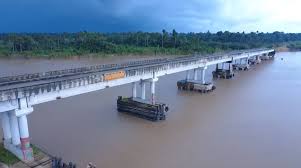
By Engr. Henry Yeigagha JP
In the creeks of Delta State, promises often travel faster than development. One such promise is the long-awaited Gbaregolor –Gbekebor–Ogulagha Road, a project that was meant to change the economic destiny of several riverine communities but has instead become another troubling symbol of stalled development in the Niger Delta.
Awarded on November 5, 2009, with reference number NDDC/EDP/DEL/PR/176, the road project was handed to Setraco Nigeria Limited by the Niger Delta Development Commission (NDDC) at a contract sum of ₦16.1 billion. The vision behind the project was clear: to link remote riverine communities across Bomadi and Burutu axis and create a vital corridor that would open up economic opportunities for at least ten communities, including Ayakoromo. More than fifteen years later, that promise remains largely unfulfilled.
Today, the debate resurfacing around the project raises a critical question: who should be held accountable for its slow progress or apparent abandonment?
Some observers argue that the communities have remained silent for too long, directing their frustration only toward the state government while ignoring the role of the NDDC. Others believe the issue runs deeper than community silence. The truth lies somewhere in between.
The Gbaregolor –Gbekebor–Ogulagha Road is not a state government project; it is a federal intervention executed through the Niger Delta Development Commission, an institution established in 2000 to fast-track infrastructure and human development across the oil-producing region. In theory, the Commission was designed to correct decades of neglect and environmental degradation in the Niger Delta. In practice, however, the story has often been different.
Over the years, the Commission has faced persistent allegations of abandoned projects, contract irregularities, and weak oversight. Several audits of the agency have revealed troubling patterns in procurement processes, including cases where projects were awarded without proper competitive bidding or transparent documentation. The Gbaregolor –Gbekebor–Ogulagha Road appears to reflect some of these systemic challenges.
Reports from oversight reviews have indicated irregularities in procurement procedures linked to the project, raising questions about transparency in the award process and the management of funds associated with it. Such revelations reinforce a painful reality many Niger Delta communities already know too well: development projects are sometimes announced with fanfare but executed with uncertainty. Yet it would also be unfair to frame the issue solely as a story of corruption or bureaucratic inefficiency.
The Niger Delta terrain itself presents enormous logistical challenges. Building roads across swampy riverine environments requires extensive engineering work, heavy financial investment, and long-term commitment. Delays are therefore not entirely unexpected. But fifteen years is not merely a delay; it is a development crisis.
The road was conceived as more than just asphalt and concrete. For communities along the Gbaregolor –Gbekebor–Ogulagha corridor, it represents access to markets, healthcare, education, and economic mobility. It represents the possibility of connecting isolated riverine settlements to the broader economic life of Delta State.
When such a project stalls, the consequences are not abstract; they are felt daily by the ordinary people who continue to travel through waterways and muddy paths where a modern road was promised. This is why the renewed conversation about the project must go beyond blame games. Accountability must be collective and deliberate.
The Niger Delta Development Commission must provide a clear and transparent update on the status of the project: how much funding has been released, what percentage of work has been completed, and what timeline exists for completion. The contractor must also be held responsible for meeting its contractual obligations. Equally important, community leaders, civil society organizations, and political representatives must amplify their voices; not in confrontation, but in constructive engagement that demands transparency and progress.
Development in the Niger Delta has too often been defined by abandoned signboards announcing projects that never materialize. The Gbaregolor –Gbekebor–Ogulagha Road must not become another monument to broken promises.
If the region is to move forward, projects like this must be treated not as political announcements but as binding commitments to the people whose land produces the wealth that sustains the nation. For the communities waiting along this road corridor, the message is simple: development delayed must not become development denied.
Independent journalism, sustained by readers like you.
The Parliament Diary is published by The Parliament Cable Network Service Limited. Your support helps us keep covering governance, parliamentary affairs and grassroots politics across Nigeria.