

PDP Will Be On The Ballot In 2027, Saraki Declares

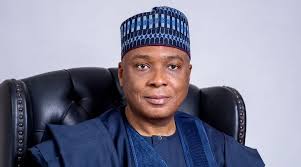
A former President of the Senate, Dr Abubakar Bukola Saraki, has declared that the Peoples Democratic Party (PDP) will come out strong after its national convention slated for this weekend.
The former Kwara State governor, who noted that the convention provides a pathway to PDP stability, expressed confidence that the party would field candidates in the 2027 general elections.
The PDP camp, backed by the Minister of the Federal Capital Territory (FCT), Nyesom Wike, will hold its national convention on March 29 and 30. The convention comes amid reconciliation talks with Tanimu Turaki-led PDP, backed by the party’s governors.
Recall that the PDP has been locked in the crisis of confidence, resulting in a lengthy legal dispute.
But speaking in an exclusive with Our Correspondent yesterday, Saraki said most of the issues would be resolved after the convention, dismissing insinuations that the erstwhile ruling party is dead.
He said the PDP would field candidates for the 2027 general election, adding that many Nigerians still believed in the party which set the foundation and nurtured democracy in the country for over a decade.
The Senate President said while PDP had some internal issues due to personal ambitions of some leaders, it had always managed such and only degenerated recently.
“As we all know, courts are not where you resolve political issues. You still have to come back table and find a solution. So, it has been difficult, but it’s normal for opposition parties, especially a larger opposition party. And then when you have a ruling party that’s also getting too involved in our own party.
“So, you should expect that. It’s part of the challenges that we’ve been fighting. But the incentive or what keeps us going is that in reality, when you go down to the grassroots today, PDP is a name that’s become a household name,” he said.
He noted that contrary to commentators who say PDP is dead, people in the states still regard PDP as the main opposition party.
He said the party leaders had done well in resolving the internal issues until Ibadan Convention came up.
“Unfortunately, we made mistakes there, and that led us to the courts. Now we have to come to the table. I think that’s what we want to do over the next few days that will lead us to a convention, and hopefully post-convention, we’ll be able to come together and do the most important thing that we need to do, which is what Nigerians want to see, which is that PDP is on the ballot paper in 2027. “
Saraki said Nigerians, who have seen the value of PDP, while in power will ensure that the party is on the ballot paper in 2027 elections.
He further said that all effort must be made so that people can seek for elective positions on the PDP platform.
I’m happy to say that despite whatever side anybody finds himself or herself in these disagreements, everybody has resolved that, that is a number one priority for all of us, wherever you find yourself. Whether you are Governor Seyi Makinde, or you are Governor Bala, or you are FCT Minister, or you are anywhere, or those who are neither, number one key priority is that PDP must be able to fill candidates for election in 2027.
“Anything that will harm that, or make that not possible, we need to drop it and resolve it. I think that’s where we are and that’s not easy to get to that position. And we hope we can maintain that position and take us through. Now, the processes that take you there are very, very clear. We must have a national working committee that will be able to do that,” he said.
The former Senate President however expressed regretted that the 10th National Assembly failed to make electronic transmission of election results mandatory. He said it was fundamental to the electoral process.
Saraki, recalled that the 8th Senate, under his leadership, made the attempt to review the country electoral legal framework that guaranteed credible polls but that was realisable.
“In the 8th National Assembly, we made an attempt at the Electoral Act. One of the key issues that I still think is fundamental in the electoral process is this issue of transmission of results.
“In the 8th Senate, we passed it. We saw that it was a game-changer in the electoral process and we passed it in the 8th Senate. The House of Representatives (differed) said ‘maybe, maybe’.
“We were able to do it in the Senate. But then the House did not go with us. And when they went to conference, they had the game.
“This time around, there was another opportunity. This time it was the House of Representatives. I still believe that this is one amendment of the electoral act that we have to pass. Whether we pass it before the 2027 election, even if we don’t, we owe it to this country,” he said.
The former Senate President noted that the National Assembly owes Nigeria a duty to put the country before individual or party interests.
According to him, until Nigeria gets that electoral process credible and transparent, it will not get governance or democracy right.
“So that is one fundamental thing that we lost the opportunity to do it. I hope that when the 11th National Assembly comes, that I think for them to do it, the executive too, must play a role. The ruling party at that time, too, must let them not think of what is in their own interest as a party but the interest of the country,” Saraki said.
He expressed concern Nigeria’s institutions were too weak, be they the Independent National Electoral Commission (INEC), National Assembly or judiciary.
“My own concern is that our institutions are just too weak. Whether it is INEC, whether it’s the National Assembly, whether it’s the judiciary, these institutions are too weak.
“We need to strengthen these institutions if we truly want to have a strong democratic setting. And one of those is having an election that can be seen as credible. The moment we can do that, the rest will begin to fall in line,” he added.
Independent journalism, sustained by readers like you.
The Parliament Diary is published by The Parliament Cable Network Service Limited. Your support helps us keep covering governance, parliamentary affairs and grassroots politics across Nigeria.