
Reps Demand Probe into Decay of Nigerian Missions in the U.S., Decry Global Embarrassment

By Racheal Najin Babatunde
The House of Representatives has expressed grave concern over what it described as the appalling state of Nigerian diplomatic missions in the United States, describing the situation as both embarrassing and detrimental to the country’s international image.
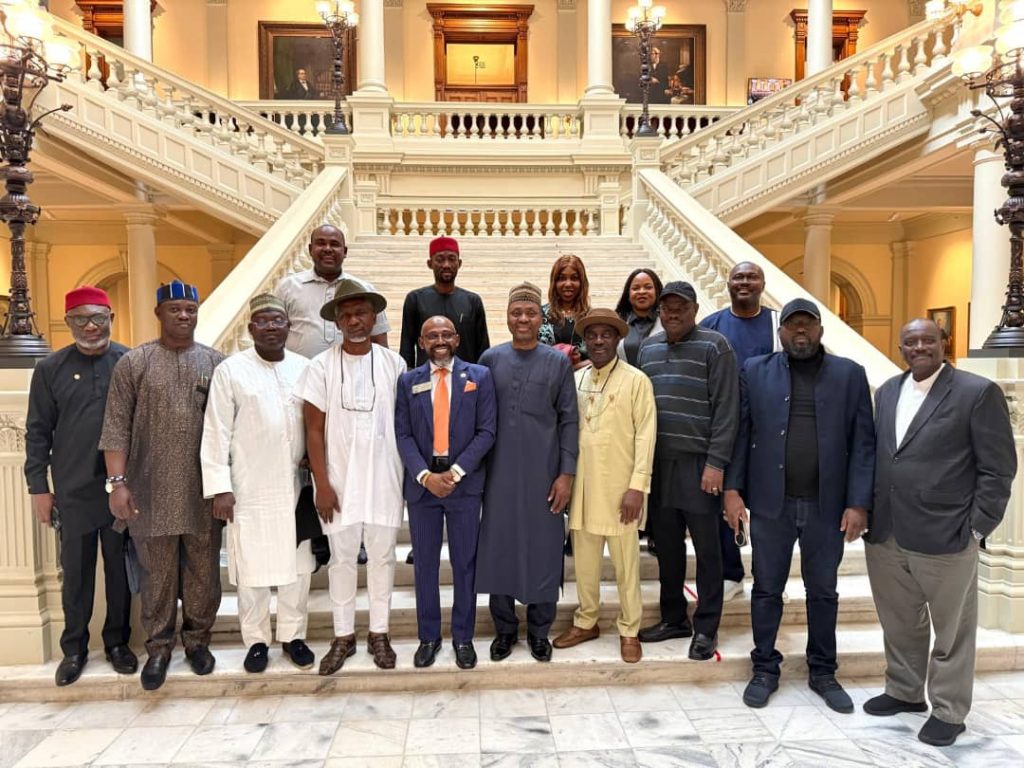
This follows disturbing findings from a recent oversight visit by members of the Nigeria–United States Parliamentary Friendship Group to Nigeria’s missions in New York, Atlanta, and Washington D.C.
In a motion of urgent public importance presented by Rep. O.K. Chinda and supported by 21 other lawmakers, the House noted with dismay the extent of administrative decay and systemic dysfunction plaguing the missions.
According to the motion, the Nigerian Mission House in New York is reportedly unable to pay its rent and has left more than 30 staff without salaries for over a year, while the elevator in the Washington D.C. mission was only restored after a private Nigerian citizen volunteered to repair it—a situation that underscores the severity of neglect facing the country’s foreign service operations.
The lawmakers said the state of the missions contradicts the foreign policy objectives enshrined in Section 19 of the 1999 Constitution (as amended), which mandates the promotion and protection of national interest, African integration, international cooperation, and a just world economic order.
They argued that while Nigeria maintains diplomatic missions globally to foster bilateral ties, provide consular services, and protect the interests of Nigerians abroad, the disrepair and dysfunction at the missions in the U.S. reflect a deep failure in upholding these responsibilities.
There was particular concern that Nigeria has failed, for two years running, to appoint both a Permanent Representative to the United Nations and a High Commissioner to the United States.
The lawmakers noted that this vacuum is not only damaging to the country’s diplomatic engagement but also harmful to its strategic ambition of securing a permanent seat on the United Nations Security Council.
The absence of these high-level representatives, especially in a country as pivotal as the United States, has created a negative perception of Nigeria and may weaken its influence in global affairs.
Despite annual budgetary allocations for the upkeep of these foreign missions, including provisions for operational costs, maintenance, and staff welfare, the House observed that the diminishing value of the naira has rendered these funds grossly inadequate.
This has contributed to the inability of missions—especially those in the U.S.—to meet their obligations.
Lawmakers lamented that the resultant neglect, mismanagement, and administrative decay have not only embarrassed Nigeria but also risk plunging the country into diplomatic irrelevance among global actors.
They further described the decay as a breach of the country’s obligation to its citizens abroad, and to its own international standing.
With several key international institutions, including the United Nations, headquartered in the U.S., the lawmakers stressed that Nigeria’s diplomatic posture in that country is central to its global agenda and must not be left to deteriorate further.
The House mandated its Committee on Foreign Affairs, in collaboration with the Nigeria–U.S. Parliamentary Friendship Group, to conduct a thorough investigation into the financial, administrative, and infrastructural state of the Nigerian missions in New York, Atlanta, and Washington D.C., with a view to uncovering the root causes of the salary delays, operational failures, and mismanagement of appropriated funds.
The committee is expected to submit its findings and recommendations within four weeks to guide further legislative action.
The motion was co-sponsored by a bipartisan group of lawmakers who emphasized the urgency of rescuing Nigeria’s international image from further ridicule.
They include Hon. Jesse Okey-Joe Onuakalusi, Hon. Fred Agbedi, Hon. Aliyu Mustapha, Hon. Muktar Mohammed, Hon. Bassey Akiba, Hon. Chimaobi Atu, Hon. Aminu Jamo Daura, Hon. David Ogewu, Hon. Harrison Nwadike, Hon. Chinwe Nnabuife, Hon. Ajilo Umar, Hon. Dabo Haruna, Hon. Wakili Boya, Hon. Abdulkareem Hussain, Hon. M.B. Jajere, Hon. Nasiru Shehu, Hon. Adamu Ranga, Hon. Sadiq Tafida, Hon. Shehu Dahaltu, Hon. Jibrin Abdulmumuni, and Hon. Tijani Zannah.
Rep. Chinda, in leading the motion, warned that if immediate and pragmatic steps are not taken to address the rot, Nigeria risks not only losing the confidence of its citizens in diaspora but also diminishing its voice and relevance on the global stage.
END
Independent journalism, sustained by readers like you.
The Parliament Diary is published by The Parliament Cable Network Service Limited. Your support helps us keep covering governance, parliamentary affairs and grassroots politics across Nigeria.