

BEYOND ARRESTS: THE FORENSIC IMPERATIVE – BUILDING AN UNASSAILABLE CASE IN THE OZORO MASS RAPE INVESTIGATION.

INTRODUCTION
In the aftermath of the harrowing events that unfolded in Ozoro’s Oramudu Quarters, the Delta State Police Command has acted with commendable alacrity. The confirmation of fifteen arrests signals a crucial first step toward accountability for the alleged mass sexual assault that has sent shockwaves through the nation. Yet, in the cold calculus of criminal justice, arrests are merely the prologue. The true measure of the state’s resolve will be determined not by the number of suspects in custody, but by the number of convictions secured in a court of law. I say these things as a “professed” criminal defence lawyer.
To achieve this, the authorities must pivot from standard [Nigerian] investigative protocols to a forensically sound, multi-dimensional inquiry. Anything less risks allowing the perpetrators to exploit evidentiary gaps, transforming a moment of collective outrage into a monument of judicial failure. This is not merely a call for diligence; it is a demand for a seminal shift in how Nigeria prosecutes gender-based violence on a mass scale.
THE EVIDENTIARY CHASM IN SEXUAL VIOLENCE PROSECUTION
The conviction rate for sexual offences in Nigeria remains dismally low, a reality that emboldens perpetrators and deepens the trauma of survivors. The primary obstacle is rarely a lack of suspects, but a lack of compelling, admissible evidence. In cases of mass sexual assault – where chaos, shame, and fear converge – the traditional reliance on witness testimony alone is insufficient. Memories become fragmented, victims may be reluctant to speak, and the sheer number of assailants creates a labyrinth of culpability.
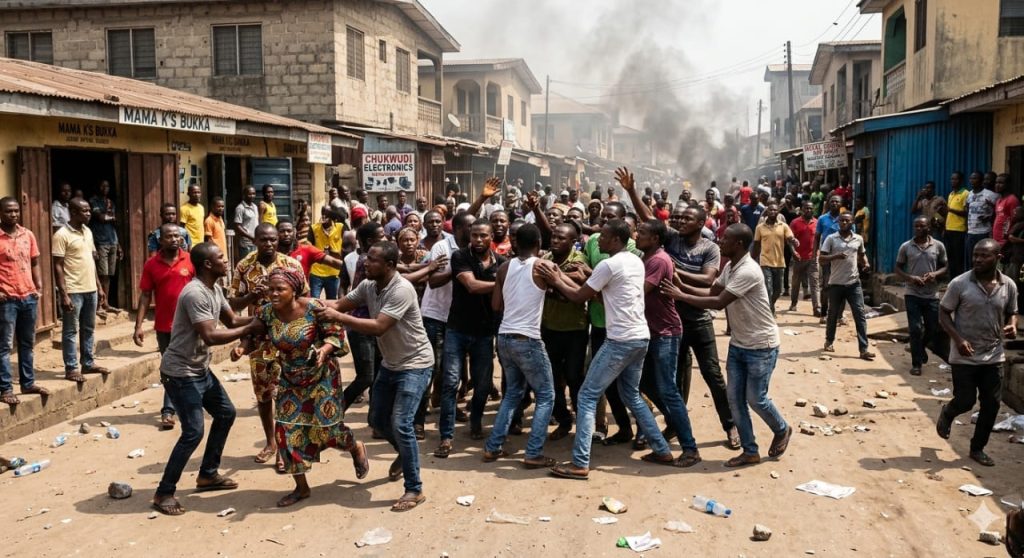
The Ozoro case presents a unique forensic opportunity that must not be squandered. Preliminary police reports indicate that criminal elements exploited a local festival to perpetrate acts of sexual violence. This context – a public gathering – means that the crime scene is not a secluded alley but a sprawling, contaminated site. Without meticulous forensic application, crucial biological evidence, trace materials, and digital artefacts will degrade or be lost forever.
“Justice rushed is justice crushed,” declared Justice Oluwafunmilayo Adebayo of the Lagos State High Court in a 2024 ruling on evidence admissibility. “The prosecution must build a cathedral of proof, not a house of cards.” This metaphor captures the essence of what is required in Ozoro: a structure so solid that no wind of defence advocacy can topple it.
THE ADVERSARIAL REALITY: CALLING EVERY CRIMINAL DEFENCE LAWYER
We must confront an uncomfortable truth head-on. In every criminal prosecution, the defence Bar has a sacred duty: the calling of every criminal defence lawyer is to rock the apple cart of the prosecution. This is not cynicism; it is the foundational principle of the adversarial system. The defence is constitutionally mandated to test the state’s case, to probe every weakness, to exploit every procedural irregularity, and to sow reasonable doubt wherever the soil of investigation has been poorly tilled.
As the revered American defence attorney Clarence Darrow famously observed: “The pursuit of justice is not a straight line; it is a battlefield where the state’s evidence must survive the assault of cross-examination.” In the Ozoro case, we can be certain that skilled defence counsel will scrutinise every aspect of the police investigation. They will question the chain of custody. They will challenge the admissibility of video evidence. They will probe the voluntariness of confessions. They will seek to exclude improperly obtained exhibits. They will, in short, rock the apple cart with every tool at their disposal.
This is not a flaw in the system; it is the system functioning as designed. The onus, therefore, falls entirely upon the prosecution and the investigating authorities to construct their case with such scientific rigour that no amount of adversarial rocking can dislodge the truth. The investigation must be scientifically constructed in such a way that this adversarial dismantling is not achievable with the least resistance. In other words, the state must build a case so forensically impregnable that the defence’s attempts to dismantle it meet not weakness, but fortified granite.
THE TRIAD OF FORENSIC IMPERATIVES
A robust investigation capable of withstanding the crucible of the courtroom must rest on three pillars: medical forensics, digital forensics, and environmental forensics.
First: Medical Forensics Must Be Immediate and Specialised
Every survivor must be provided with immediate access to trained Sexual Assault Forensic Examiners (SAFEs). The collection of DNA evidence from survivors (victims)- including epithelial cell samples, foreign hair, and bodily fluid residues – must adhere to a strict chain of custody. In a mass assault scenario, the ability to match DNA profiles from survivors to specific suspects will be the single most powerful tool to establish penetration and identity beyond a reasonable doubt.
The government must ensure that these examinations are conducted free of charge, in a trauma-informed environment, and with the explicit, ongoing consent of the survivors. “The body is the primary crime scene,” notes Dr Nwosu, a forensic pathologist based in Abuja. “Every hour that passes without proper forensic examination is evidence walking out the door.”
Second: Digital Forensics Must Be Exhaustive
This is where the nature of modern crime becomes an investigative asset. The incident was reportedly captured on video by attendees and subsequently circulated on social media. These digital artefacts are not merely disturbing content; they are silent witnesses.
A competent forensic unit must extract, authenticate, and analyse every piece of video footage and photographic evidence. This involves more than simply watching the videos; it requires geolocation analysis to confirm the scene, temporal analysis to establish timelines, and facial recognition comparison to match identified suspects with their alleged actions. Metadata embedded in these files – often overlooked by conventional investigators – can provide an unbroken chain of evidence linking the digital record to the physical event.
“In the digital age, perpetrators document their own downfall,” declared Interpol’s cybercrime director at a 2025 conference on digital evidence. “The video is not just a recording; it is a confession rendered in pixels.” The Ozoro investigators must treat every video file as a potential exhibit worthy of forensic authentication.
Third: Environmental Forensics Must Be Deployed
Investigators should conduct a systematic search of the Oramudu Quarters for discarded clothing, weapons, or other items that may contain biological material linked to the suspects. While the scene has likely been compromised, a thorough search may still yield critical physical evidence that corroborates survivor accounts and digital footage.
Soil samples, fabric fibres, and discarded items can all serve as corroborative evidence when properly collected and analysed. “Every contact leaves a trace,” affirmed Edmond Locard, the father of forensic science, in his famous exchange principle. The investigators must assume that Locard’s principle holds true and act accordingly.
A CLARION CALL TO DIGITAL WITNESSES
In this pursuit of forensic completeness, there exists a group of individuals who hold the keys to justice: those who recorded the atrocity. It is a tragic irony of our age that perpetrators often become documentarians of their own crimes. To those who captured these events on their mobile devices, I issue this invitation not as an accusation, but as a summons to civic duty.
Your actions in that moment may have been driven by confusion, fear, or even a misguided desire to document a festival. But now, you possess evidence that could dismantle a criminal network. The authorities do not seek to penalise you for recording; they seek your partnership to identify the perpetrators hidden within your footage. You possess the contextual details that algorithms cannot discern – who the primary instigators were, the sequence of events, and the identities of those who fled.
“The camera does not lie, but it requires a courageous hand to surrender its truth to justice,” wrote human rights advocate Femi Falana SAN in a recent commentary on citizen journalism. Coming forward with your full, unedited video files is an act of profound courage. It provides investigators with the raw material for digital forensic analysis: timestamps to establish chronology, audio to capture commands and reactions, and visual evidence to corroborate survivor testimonies.
Do not assume that the police already have what you have. In complex investigations, every angle matters. Provide your evidence directly to the Commissioner of Police or the designated investigative team to ensure it is properly documented and protected for trial.
SAFEGUARDING THE CHAIN OF CUSTODY AND WITNESS PROTECTION
For all this forensic effort to culminate in conviction, the integrity of the evidence must be sacrosanct. The police must establish a strict chain of custody for every piece of biological, digital, and physical evidence. Any break in this chain – any moment where evidence is unaccounted for – will be exploited by defence counsel to introduce reasonable doubt.
Further, a forensic investigation of this magnitude is impossible without the active participation of survivors and witnesses. This necessitates a comprehensive witness protection programme. Those who come forward with video evidence, and the survivors who submit to forensic examinations, are placing themselves at potential risk of intimidation or reprisal. The state has a duty to provide secure accommodation, legal support, and, where necessary, identity protection. Justice cannot be pursued at the expense of the safety of the victims.
“No witness should be asked to choose between their safety and the safety of society,” the National Human Rights Commission stated in its 2025 protocol on sexual offence investigations. This principle must guide every step of the Ozoro investigation.
CONCLUSION: DEFINING JUSTICE BEYOND ARRESTS
The arrests made by the Delta State Police Command under the directive of Commissioner Aina Adeshina demonstrate a capacity for swift action. But the citizens of Ozoro, and indeed all Nigerians, are watching to see if that capacity extends to the long, painstaking work of forensic investigation and prosecution.
A mass sexual assault is an attack on the social fabric. To mend that fabric, the response must be more than performative. It must be seminal, robust, and forensically unassailable. It must deploy medical experts to gather biological proof, digital analysts to authenticate viral videos, and environmental teams to scour physical spaces for evidence. And it must welcome, with protection and gratitude, those digital witnesses whose recordings may hold the key to justice.
Let us remember the words of Justice Rosaline Bozimo, retired Justice of the Court of Appeal: “A conviction obtained without forensic rigour is not a victory; it is a liability waiting to be overturned. The true measure of justice is not the speed of arrest but the endurance of the conviction on appeal.”
Let this moment be a turning point. Let it be the case where we demonstrate that in Nigeria, the arrest of fifteen suspects is not the final headline, but the beginning of a journey toward indisputable, lasting convictions. The evidence exists. The technology exists. The will must now be summoned to see justice through to its righteous end.
The defence lawyers will come. They will rock the apple cart. The question is whether the prosecution has built a case that stands firm – or one that collapses at the first push. *Build it to last. Build it with science. Build it with courage. Build it for the survivors of Ozoro, whose voices deserve not merely to be heard, but to be vindicated.
I rest my case!
Independent journalism, sustained by readers like you.
The Parliament Diary is published by The Parliament Cable Network Service Limited. Your support helps us keep covering governance, parliamentary affairs and grassroots politics across Nigeria.