
An Opportunity Ndokwa Must Not Miss

By Dr. Jude Chukwudi Dike, Ph.D.
In the shifting currents of Delta politics, moments of symbolic triumph are rare, moments of strategic consequence are rarer still.
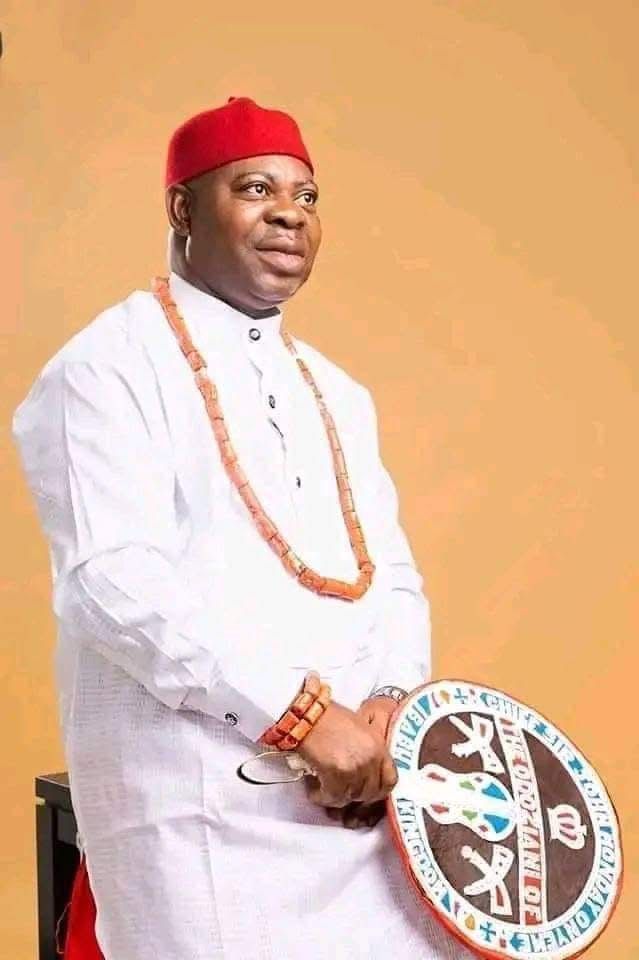
For the Ndokwa ethnic nationality, the present political configuration in Delta State represents, under the joint leadership of Sheriff Oborevwori and his deputy, Monday Onyeme, an Ndokwa son now occupying the highest political office ever attained by anyone from Ndokwaland.
For the first time in the oil-rich state’s history, an Ndokwa indigene serves as Deputy Governor — a milestone that cannot be dismissed as ceremonial or accidental. It is, in fact, a defining political elevation for a people long situated at the margins of state power despite inhabiting one of the most resource-endowed terrains in the Niger Delta.
For decades, Ndokwaland has contributed to the petroleum wealth that fuels both state and federal revenues. Yet the paradox has endured: oil wells amid underdevelopment; fiscal abundance amid infrastructural neglect. Roads remain fragile, youth unemployment stubborn, and basic economic diversification elusive.

Political underrepresentation has often mirrored this economic neglect. That is why this moment must be seen not simply as an appointment, but as an opening.
Politics, at its core, is about leverage. Communities that understand this do not squander access to power when it comes within reach. Supporting the current administration in Delta State is not merely about partisan loyalty; it is about consolidating a historic gain. The elevation of an Ndokwa son to the Deputy Governorship signals recognition by the state’s dominant political actors. It is a statement that Ndokwa is not peripheral to Delta’s future, but central to it.
Some within the Ndokwa fold express discomfort with the state government’s working alignment with the federal administration led by the All Progressives Congress. In a polarized national environment, such alliances can stir suspicion but political maturity demands strategic thinking. Federal–state cooperation, regardless of party differences, often determines the flow of projects, appointments and fiscal considerations. If leveraged wisely, such alignment can serve Ndokwa interests rather than undermine them.
More importantly, political memory in Nigeria is long. Should Ndokwa appear divided or indifferent when one of its own is entrusted with a high office, it would send a discouraging signal to state and national stakeholders. It would suggest that investing political capital in Ndokwa leadership yields little communal consolidation. That would be a dangerous precedent. In the competitive calculus of Nigerian politics, perception shapes opportunity. Failure to rally behind this administration could make it markedly harder for any Ndokwa indigene to be considered for similar or even higher office in the foreseeable future.
This is not a call for blind allegiance. Support must coexist with vigilance.
The Ndokwa people can — and should — hold Sir Monday Onyeme accountable. High office is not merely symbolic; it carries obligations. The Deputy Governor must use his good offices to attract sustainable state and federal projects to Ndokwaland. Infrastructure renewal, agro-industrial development, small and medium enterprise support, educational investment and environmental remediation must move from aspiration to implementation. Political advancement that does not translate into measurable development will ring hollow.
But accountability is strongest when exercised from a position of partnership, not estrangement. A community that demonstrates cohesion strengthens the hand of its representative within government. Internal division weakens it.
The question before Ndokwa today is not simply whether to support a government. It is whether to seize a generational opportunity. Political influence, once attained, must be consolidated, not contested away in its infancy. History shows that communities that convert symbolic breakthroughs into sustained relevance do so by rallying strategically, negotiating firmly, and demanding results intelligently.
For Ndokwa, this is that moment.
To support the present administration is not to surrender the right to critique; it is to affirm a stake in Delta’s highest corridors of power. To demand performance from an Ndokwa Deputy Governor is not disloyalty; it is civic responsibility. These two impulses — solidarity and scrutiny — can coexist.
In the oil-rich heart of the Niger Delta, a long-overdue chapter has begun. Whether it becomes a footnote or a foundation depends, in no small measure, on the collective wisdom of the Ndokwa people.
(Dr. Jude Chukwudi Dike hails from one of the most underdeveloped communities in Delta State and the Niger Delta – Onuaboh, in Ndokwa East LGA)
Independent journalism, sustained by readers like you.
The Parliament Diary is published by The Parliament Cable Network Service Limited. Your support helps us keep covering governance, parliamentary affairs and grassroots politics across Nigeria.