
Reps hints on plans to review nation’s planning and budgeting architecture

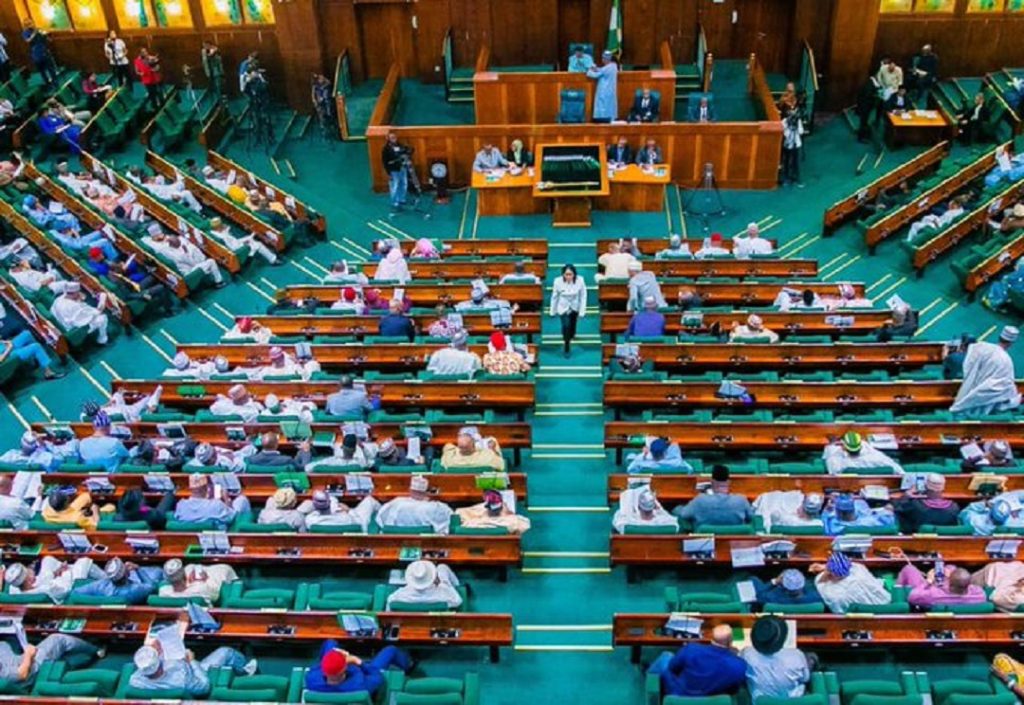
Chairman of the House Committee on National Planning and Economic Development, Hon. Gboyega Nasir Isiaka, GNI (APC, Ogun), on Monday hinted at plans to review the nation’s planning and budgeting architecture through a high-level national policy dialogue.
Hon. Isiaka dropped the hint while addressing newsmen on behalf of the joint committee of the Senate and House of Representatives on a two-day dialogue scheduled for April 14 and 15, 2026, in Abuja.
The federal lawmaker explained that the dialogue was designed to bridge longstanding gaps between national development plans and budget implementation—an issue widely seen as a major constraint to sustainable economic growth.
He further added that the dialogue would convene critical stakeholders from across government, the private sector, and policy institutions to chart a more coherent development path for the country.
According to him, the initiative—organised in collaboration with the Office of the Vice President, the Ministry of Finance, the Ministry of National Planning, and the Budget Office of the Federation—will focus on aligning Nigeria’s development agenda with its fiscal framework.
He stated that Nigeria’s current growth rate of about 3.54 per cent remains insufficient to meet its long-term economic aspirations, particularly the $1 trillion economy target.
He noted that growth must significantly outpace the country’s population increase, estimated at 2.7 per cent, to achieve meaningful progress.
According to him, “we cannot continue on a business-as-usual trajectory. Our growth must not only accelerate but must also be deliberately tied to a well-structured and implementable national plan.”
While reflecting on Nigeria’s history of development planning—from pre-independence strategies to Vision 2020 and the Economic Recovery and Growth Plan—he observed that while some frameworks recorded partial successes, many fell short due to structural weaknesses, macroeconomic volatility, and external shocks such as fluctuating oil prices.
According to him, “the lessons are clear. Plans alone are not enough; execution, consistency, and adaptability are critical. This dialogue is about getting it right going forward.”
The lawmaker further explained that the forum would also serve as a platform for robust engagement among policymakers, legislators, heads of Ministries, Departments and Agencies (MDAs), and experts in finance, procurement, and economic planning, with the aim of producing actionable outcomes.
According to him, “We are bringing everyone to the table to build consensus around a planning and budgeting system that delivers real, measurable results for Nigerians.”
In his own contribution, the Deputy Chairman of the House Committee on Budget and National Planning, Hon. Clement Jimbo, underscored the centrality of strategic planning to national development, warning that weak planning frameworks could continue to undermine economic progress.
According to him, “if you fail to plan, you are invariably planning to fail,” Jimbo said, as he pointed to global examples such as Singapore’s transformation through disciplined and forward-looking policies.
He emphasised that even marginal improvements from the dialogue could have far-reaching impacts on Nigeria’s development trajectory.
“Even if we achieve just one per cent improvement from the ideas generated here, it will significantly enhance our planning process and outcomes,” he noted.
On Nigeria’s current budgeting model, particularly the envelope system, Jimbo acknowledged existing concerns but maintained that every system comes with inherent limitations. He explained that while alternatives such as zero-based budgeting offer advantages, they may be difficult to implement fully given the scale of government operations.
According to him, “with over a thousand MDAs, adopting zero-based budgeting wholesale could be time-intensive and impractical. What we need is a system that reflects our realities while improving efficiency and accountability.”
He added that the dialogue would explore a range of options, including performance-based budgeting, with breakout sessions designed to enable MDAs to share experiences and propose reforms tailored to Nigeria’s context.
While responding to questions on managing potential oil windfalls, Jimbo said while the responsibility lies primarily with the executive, there are viable strategies to ensure fiscal stability, including saving excess revenues and adjusting budgets to reflect changing economic conditions.
According to him, “there are multiple pathways to managing windfalls effectively, and I am confident that with the right framework, Nigeria can better optimise such opportunities.”
He expressed optimism that the forthcoming dialogue would mark a turning point in Nigeria’s approach to development planning—laying the foundation for a more responsive, coordinated, and results-driven budgeting system capable of delivering sustained economic growth
Independent journalism, sustained by readers like you.
The Parliament Diary is published by The Parliament Cable Network Service Limited. Your support helps us keep covering governance, parliamentary affairs and grassroots politics across Nigeria.