
Dangote warns against using monopoly claims to discourage indigenous investment

Fatima Ndagi
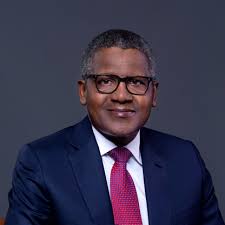
The Founder of Dangote Group, Alhaji Aliko Dangote, has cautioned against using the “cry of monopoly” to discourage indigenous investment and industrial growth in Nigeria, stressing that no one is barred from investing in the country’s economy.
Dangote made this known on Monday at the 2025 Inaugural Annual Downstream Petroleum Week, organised by the House of Representatives Committee on Petroleum Resources (Downstream).
Represented by the Group Chief Strategy Officer of Dangote Industries Limited, Aliyu Suleman, Dangote urged policymakers and stakeholders to focus on creating an environment that encourages productivity, innovation, and healthy competition.
“Too many people with the means to build industries chose instead to invest abroad,” he said. “We have chosen differently — to build here, to employ here, and to produce here. Let us not use the cry of monopoly to stifle growth. No one is prevented from investing. We welcome others to build their own refineries, and we will offer support in whatever way we can.”
Dangote emphasized that Nigeria holds a natural competitive advantage in refining due to its proximity to crude oil and gas supply.
“We should work together to develop this sector and enact laws that will help it prosper. Let us protect our industries and deliver the economic transformation this country deserves,” he added.
According to him, the Dangote Refinery now has the capacity to meet all of Nigeria’s demand for diesel and jet fuel, with surplus for export. He disclosed plans to list the refinery on the stock exchange soon, giving Nigerians the opportunity to become shareholders in what he described as “a national asset.”
Dangote lamented Africa’s underdeveloped refining capacity compared to its crude oil production and consumption.
“While Europe and Asia refine over 95 percent of their petroleum products, Africa refines only about 40 percent,” he noted. “Refining is capital-intensive and technologically complex, but at Dangote, we are known for taking bold steps.”
He detailed the scale of the refinery project:
“We collected over 2,700 hectares of land, pumped 65 million cubic meters of sand to stabilise the site, installed over 250,000 foundation bars, and laid millions of meters of piping and cabling. At peak, we had over 60,000 people on site, 50,000 of whom were Nigerians.”
Dangote highlighted that with the refinery and other local facilities, Nigeria now has over one million barrels per day of installed domestic refining capacity, which could drive job creation, skill development, and industrial linkages — if fully enabled.
He, however, raised concerns over the current import licensing regime, which he said exposes local refineries to unfair competition.
“Most of these imports come from Russia, where crude sells for $25 per barrel cheaper than Nigerian crude due to sanctions. This is effectively dumping, which hurts domestic refineries,” he warned.
Dangote called for the protection of indigenous industries, the reduction of coastal transport costs, and the development of Nigeria as a regional refining hub serving West and Central Africa.
“When we entered the cement sector, Nigeria produced less than two million tonnes per year and relied heavily on imports. Today, through investment and government support, Nigeria is a net exporter of cement. The same transformation is underway in refining,” he said.
The Speaker of the House of Representatives, Rt. Hon. Abbas Tajudeen, urged stakeholders in the petroleum industry to work collaboratively to reposition Nigeria’s downstream sector for sustainable growth, transparency, and innovation.
Represented by his Deputy, Rt. Hon. Benjamin Kalu, Abbas said the conference theme — “Celebrating Our Successes, Confronting Our Challenges and Finding Solutions for the Petroleum Downstream Sector” — underscores the need to celebrate progress while addressing long-standing challenges through collective action.
He commended President Bola Ahmed Tinubu for ongoing reforms under the Renewed Hope Agenda, which he said are revitalising key sectors of the economy, particularly oil and gas. Abbas described the operational take-off of the Dangote Refinery as a turning point in Nigeria’s quest for energy self-sufficiency.
“The anticipated emergence of more private refineries underscores the need for a functional environment that encourages investment, promotes efficiency, and reduces dependence on fuel imports,” the Speaker said.
He attributed much of the sector’s progress to the Petroleum Industry Act (PIA) 2021, which restructured the NNPC into a commercial entity and established regulatory agencies such as the NUPRC and NMDPRA.
“The PIA has renewed investor confidence, promoted transparency, and curbed inefficiencies. The National Assembly remains committed to enacting laws that strengthen the sector and promote national development,” Abbas said.
The Chairman of the House Committee on Petroleum Resources (Downstream), Hon. Ikenga Imo Ugochinyere, called for stronger collaboration among stakeholders to sustain reforms and build a transparent, self-reliant, and globally competitive downstream petroleum industry.
“This summit is not just a gathering; it is a national dialogue aimed at repositioning the downstream sector as a driver of economic growth, innovation, and industrial development,” he stated.
Ugochinyere commended the NMDPRA, NUPRC, and CORAN for their professionalism and courage in advancing domestic refining despite past uncertainties. He cited key sectoral milestones — including Indorama Petrochemicals’ urea expansion, Waltersmith Refinery’s upgrade, and the 650,000 barrels-per-day Dangote Refinery — as evidence of renewed investor confidence.
He also hailed the enforcement of the Domestic Crude Oil Supply Obligation (DCSO) as a major policy shift ensuring that refineries get local crude before exports.
Ugochinyere revealed that his Committee plans to introduce new legislation granting local refineries first right of refusal on crude allocations, streamlining regulatory processes, and establishing a Refinery Protection and Promotion Bill to classify refineries as strategic national assets.
“These measures will guarantee stability, protect investments, and promote growth across the value chain,” he added.
The Minister of State for Petroleum Resources (Gas), Ekperikpe Ekpo, called for sustained collaboration between the Executive and Legislature to address lingering challenges in the downstream petroleum and gas sectors.
“The theme of this year’s conference is timely. It invites us to reflect on how far we’ve come, confront our challenges, and find sustainable solutions for Nigeria’s downstream industry,” he said.
Ekpo cited progress made through deregulation, market liberalisation, and new private investments under President Tinubu’s Renewed Hope Agenda and the Decade of Gas Initiative. These, he said, are aimed at expanding gas infrastructure, deepening domestic utilisation, and transitioning to cleaner fuels like CNG, LNG, and LPG.
He, however, acknowledged that issues such as infrastructure deficits and regulatory uncertainty still hinder progress, stressing the need for policy consistency, private sector participation, and adherence to global best practices.
“Transforming Nigeria’s downstream and gas sectors cannot be achieved by government alone. It requires the combined effort of the Legislature, Executive, private sector, and the Nigerian people,” Ekpo said.
He commended the House Committee for its leadership in fostering dialogue and accountability in the energy sector, urging all stakeholders to remain committed to partnership, innovation, and sustainable growth.
“Together, we can build a downstream sector that truly supports industrialisation, creates jobs, and delivers prosperity for all Nigerians,” he concluded
Independent journalism, sustained by readers like you.
The Parliament Diary is published by The Parliament Cable Network Service Limited. Your support helps us keep covering governance, parliamentary affairs and grassroots politics across Nigeria.